A Floral Escape in the City
A massive flower garden in the middle of the desert sounds improbable. That improbability is exactly the point. Miracle Garden is not subtle, not natural in the traditional sense, and not trying to be. It is a large scale display of color, pattern, and visual design that reflects Dubai’s love of building the unexpected.
Locals visit it knowing it is seasonal, temporary, and a little surreal. Dubai’s climate does not naturally support fields of blooming flowers. Miracle Garden works because of irrigation systems, planning, and constant maintenance. The result is a space that feels almost theatrical, where flowers are shaped into arches, tunnels, animals, and even full sized structures.
It is less about botany and more about visual impact. Paths wind through dense floral displays that change from season to season. Heart shaped arches, towering installations, and themed sections create a sense of scale that feels exaggerated on purpose. Visitors move slowly, taking photos, pausing at each new structure. The pace is unhurried, more like a stroll through an outdoor gallery than a park.
Many residents have seen Miracle Garden more than once, yet they return when it reopens each season. The designs change enough to make each visit feel slightly different. It becomes a casual outing during cooler months rather than a must see landmark. For families, it is an easy daytime activity that works across age groups.
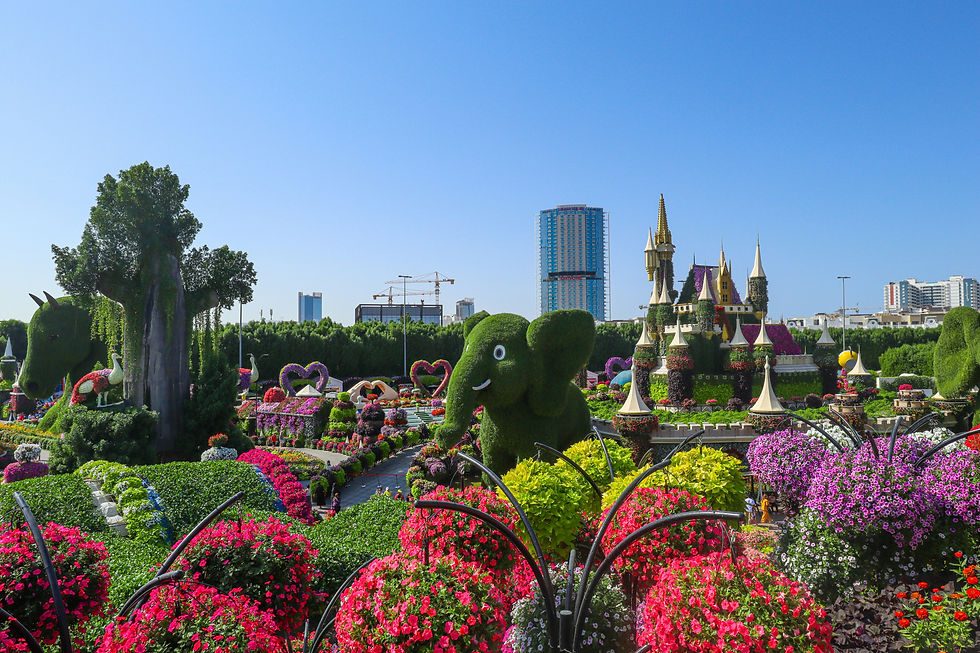
The garden challenges the common image of the UAE as only sand and glass. It shows how controlled environments can produce something completely different from the natural landscape. Locals understand that this is not about replacing nature. It is about demonstrating what can be created with planning and resources.
Unlike many Dubai attractions, Miracle Garden is best experienced during the day when the colors are vivid and the scale is clear. Early morning or late afternoon visits are more comfortable and less crowded. Midday can be bright and warm, but the open space allows for steady airflow.
There are no deep educational displays about plant species. The focus is visual enjoyment rather than environmental messaging. People come to walk, take photos, and enjoy being surrounded by color in a city where neutral tones dominate much of the year. Families, couples, and groups of friends move through the pathways, often dressed for photos. It feels social and relaxed rather than formal. Children run between installations while adults take their time framing pictures.
It is one of the few places where posing for photos feels expected rather than forced. Miracle Garden closes during the hottest months and reopens when the weather cools. That cycle makes it feel temporary and special rather than permanent. Its opening signals the start of Dubai’s outdoor season. Miracle Garden represents Dubai’s approach to spectacle. If an idea seems unlikely, the city tries to build it anyway. It blends engineering, design, and scale to create something that exists primarily for enjoyment. Miracle Garden is not about authenticity or heritage. It is about imagination made physical. In a place known for transforming landscapes, this garden fits naturally into the story.


Comments